
Straight through to the owner
Get in touch
Call or text Valentin Moriel at (432) 278-7294. He answers his own phone about nine times out of ten and will tell you what he thinks the problem is and what it costs before anything gets booked. Based in Seminole, Texas, covering Gaines County and the Permian Basin.
Service area map. Address withheld by request.
Based in Seminole, TX 79360. Se habla español.
Or send it in writing
Calling is faster and it is what most people here do. But if you are at work, if it is late, or if you would rather write it down than describe it out loud, this reaches the same person and the same inbox. Escríbalo en español si prefiere — Valentin lo lee y le contesta en español.
What to have ready when you call
You do not need any of this to call — describing what you saw is enough to start. But a call that includes these six things usually ends with an accurate price and a booked day, and one that does not usually ends with a second call later.
Where the property is. Town, and whether you are inside the city limits or out on county land. This determines the drive, the scheduling and, for anything vegetation-related, which rules apply to you.
What kind of building it is. House, mobile home, duplex, shop, commercial suite. Slab or pier-and-beam if you know. Roughly how big.
How many buildings there are. On acreage this is the biggest single factor in the price and the most commonly left out. Count the shop, the barn, the well house and the equipment shed, not just the house.
What you are seeing, where, and for how long. Not an identification — a description. "Small brown ones along the baseboard in the back bedroom, about two weeks" is far more useful than a guess at a species name.
Whether anything has already been applied. Store-bought spray, bait, a previous company, a neighbour's treatment. This is not a judgement, it is information that changes what we expect to find.
Whether there is a deadline. A closing date, a lease turnover, an inspection, a city notice with a date printed on it. This changes scheduling more than anything else, so lead with it if it applies rather than mentioning it at the end.
Describing a pest over the phone
Most people apologise for not knowing what they are looking at. There is no need — identification is our job and it happens on site. What helps is describing it well, and there is a knack to that.
Size, against something known. A grain of rice, a sesame seed, a pencil eraser, a quarter. Millimetres are meaningless over the phone and so is "small."
Where exactly, and how many. One in the bath is a different story from twenty along a wall. Bathrooms and kitchens point one direction, garages and exterior walls another, and a single room repeatedly points at something specific in that room.
Time of day. Night activity, morning discoveries and things seen in daylight are genuinely diagnostic and cost you nothing to notice.
What else is there. Droppings, shed skins, wings on a windowsill, mud tubes on a foundation, sawdust-like material, a smell, a sound in the ceiling at a particular hour. These are often more identifying than the insect itself.
Take a photograph. Phone camera, as close as it will focus, with something for scale beside it. Text it. A photograph resolves in ten seconds what five minutes of description cannot, and it is the single most useful thing you can do before a visit.
Calling, texting or emailing
All three reach the same person. Which one to use depends on what you need.
Call for anything urgent, anything complicated, and anything where you would rather talk it through than write it down. The phone is answered directly most of the time. When it is not, it is because the person who would answer it is under a house or in an attic, which is the ordinary reality of a business where the technician and the office are the same. You get a callback the same day.
Text for photographs, addresses, gate codes, scheduling confirmations and anything you want in writing. Texting is often the fastest route to an answer during working hours, and it leaves both of us with a record of the details.
Email for anything with paperwork attached — certificates of insurance, property lists, commercial requirements, invoicing arrangements. Less immediate, better for documents.
Spanish and English both, spoken by the same person, with no interpreter and no callback needed to find one.
How scheduling actually works
This is a one-truck operation covering roughly a hundred miles in every direction from Seminole, and the honest description of the schedule follows from that geometry.
Seminole and the towns nearest it are responsive. A call in the morning can often become a visit the same day, and something that genuinely cannot wait usually does not have to.
The further towns run as planned days. Work in one town is grouped so that several properties are handled on the same run, which is what makes serving them at a sensible price possible at all. The practical consequence for you is that notice buys a better slot than urgency does. A call on Monday for work seventy-five miles away lands considerably better than a call on Thursday morning hoping for Thursday afternoon.
Visits are scheduled to a day with a window rather than to a precise clock time, because inspection work does not run to fixed durations and a property that needs an extra half hour gets it. If the day is running long you get a phone call from the person who is running long, not an automated message from a dispatch system.
Seasonally, the busiest stretch is high summer, when scorpion pressure peaks and the calendar genuinely fills. The easiest time to book anything is late winter into early spring — which is also, not coincidentally, the best time to do the work that pays off most: exclusion, perimeter establishment, termite inspection ahead of swarm season and lot clearing while the vegetation is down.
What happens after you book
The first visit is an inspection before it is a treatment, and that order is not negotiable because it is what makes the treatment work. Somebody walks the whole exterior, the outbuildings if there are any, and the interior where it is relevant, and then tells you what was found before anything is applied.
That conversation covers what the problem actually is, what is sustaining it, what the treatment will be, what it costs, and what you could change yourself that would help. If the inspection turns up something that changes the scope — and inspections do, because they find things a phone call cannot — the revised number is discussed on the spot rather than appearing later on an invoice.
Afterwards you receive the documentation Texas requires for structural pest control work, including the identity and licence number of the business and information about what was applied. The sheet is the Texas Department of Agriculture's own document — under 4 TAC §7.147 a company may not substitute its own version — and it is published in English and Spanish. Separately, under 4 TAC §7.146, indoor treatments at rental property with five or more units, at workplaces, and at hotels, warehouses, food-processing premises, schools and day care centres require a pest control sign to be provided at least forty-eight hours before the treatment, so that people using the space know in advance rather than afterwards. That one does not apply to an owner-occupied house. Keep whatever you are given — a warranty claim two years from now is much simpler when the original record exists.
And you keep the number you called. Follow-up questions go to the person who did the work, not to a case reference.
Why there is no street address on this site
You will notice this site lists a town and a service area but not a street address, and that is a deliberate choice worth explaining rather than leaving as an odd gap.
This is a service-area business. Nobody visits an office, because there is no counter to walk up to and no showroom to look at. The work happens on your property. The business operates from a residential base, and publishing a home address on a public website — where it is scraped, syndicated and permanently attached to a family — buys nothing for a customer who is never going to drive to it.
What matters for a service-area business is the coverage, and that is published in full: every town on the route, the counties, the approximate distances and an honest description of how scheduling changes with each. That is more useful to you than a pin on a map you have no reason to visit.
The legal identity is not hidden either. The registered business name and the Texas Department of Agriculture licence number are both published, and the licence can be checked against the Department's own records by anybody, at any time, without asking us for anything. That is a stronger form of accountability than a street address, because a street address proves only that somewhere exists.
If you need a physical address for a specific reason — a vendor form, an insurance certificate, an accounts payable system that will not accept anything else — ask and it will be provided directly to you. The distinction is between giving it to a customer who needs it and publishing it to the entire internet.
Hours, and what counts as urgent
Working hours are ordinary working hours, with the flexibility that comes from the schedule being set by one person rather than by a dispatch system. Early starts and late finishes happen when the work needs them.
Calls and texts outside those hours are seen and answered when the day starts, and there is no after-hours call centre in between pretending otherwise. If something is genuinely time-critical, say so in the message rather than waiting to explain it on a callback.
On what actually counts as urgent: stinging insects where someone in the household is allergic, an active wasp or bee presence at a door people have to use, a rodent problem that has reached wiring, and anything with a hard external deadline attached — a closing, an inspection, a lease turnover, a dated city notice. These get moved up.
Things that feel urgent and mostly are not: a single insect sighting, a spider in a room, an ant trail that has been there a fortnight. All worth dealing with, none worth paying an emergency premium for, and none of them will be treated as an emergency here in order to charge like one.
There is no after-hours surcharge and no seasonal pricing. Calling in the busiest week of July does not change the number; it changes how soon the visit happens, which is a scheduling reality rather than a pricing decision.
What the free inspection covers
The inspection ahead of a quote is free, and it is worth being precise about what that includes so that nobody is disappointed by the boundary.
It includes the walk of the property described above, the identification of what is happening, the explanation of what is driving it, and a price for dealing with it. If you decide not to proceed, you owe nothing and you still have the explanation, which is genuinely the useful part.
It does not include a written report for a third party. A formal wood-destroying insect report for a real estate transaction is a specific regulated document with its own requirements and its own liability, and it is not what a free quote visit produces. If that is what you need, say so on the first call so nobody's time is spent on the wrong thing.
It also does not include treatment. That sounds obvious and it is worth saying anyway, because a small number of companies in this trade arrive for a "free inspection" with a loaded sprayer and an expectation that you will agree on the spot. Nothing is applied here without a price being discussed and agreed first.
What happens to your information
Your phone number, address and the details of your property are used to do the work and to contact you about it. They are not sold, not traded to lead brokers, and not passed to anyone else in the industry.
This matters more than it sounds. Homeowner data in the home services sector moves around constantly, which is why a single enquiry to one company can produce months of calls from companies you never contacted. That does not originate here.
Photographs taken during an inspection are used to explain the problem to you and to keep a service record. They are not published, posted or used in advertising without asking you first, and asking means asking, not a line buried in an agreement.
Things to call somebody else about
Not everything that looks like a pest control problem is one, and being sent to the right place is worth more than being sold a visit. These come up regularly.
Mosquitoes across a whole neighbourhood. Several cities in this region run their own vector control programmes and will investigate standing water and public breeding sites. If the problem is bigger than your lot, the city is the more effective call and it is free.
A neighbouring property that has been let go. Overgrown lots, accumulated rubbish and derelict structures are handled through municipal code enforcement, which has actual authority to compel abatement. We can treat your side of the fence; we cannot do anything about theirs.
A stray or aggressive animal. Animal control, not wildlife removal. Different problem, different authority, and in some cases a genuine urgency that pest control cannot serve.
A gas smell, exposed wiring or a water leak under a slab. Utility or licensed trade first, every time. Some of these produce conditions that then create pest problems, and that part we can help with — but not before the underlying hazard is dealt with by the right trade.
A complaint about a licensed pest control company. The Texas Department of Agriculture regulates structural pest control in this state and accepts consumer complaints about licensed businesses. That includes us. It is published here rather than hidden because a guarantee that depends on the customer not knowing their recourse is not much of a guarantee.
Fumigation, or bed bug heat treatment. Neither is offered here. If your situation genuinely calls for one, you will be told so and pointed toward a company that does it, rather than sold something adjacent that will not solve it.
Why the form asks for so much
This page used to say there was no form here on purpose, and the objection behind that was a fair one. Most pest control forms take six fields and a message, and then somebody calls back to ask everything the form did not — which means the form cost you time instead of saving it.
The form above is longer than that on purpose, and it asks for the same things the section on what to have ready asks for. Where the property is, what kind of building, how many buildings, what you are seeing and for how long, what has already been applied, whether there is a deadline. Those are the questions whose answers change the next question, and a form that skips them is a form that ends in a phone call anyway.
Five fields are required and the rest are not, because a half-filled form that arrives is worth more than a complete one somebody abandoned. Nothing on it is a booking. It does not hold a slot or reserve a day, and no automated sequence starts when you send it. It is a message that arrives in one man's inbox and gets answered by him.
Calling is still faster, and that is worth saying plainly rather than burying under a form. A conversation branches in a way that no set of fields can, and it usually ends with a price and a day rather than a reply later. If the thing you have is urgent, use the phone. If it is not, or if writing suits you better, the form is there and it goes to the same person.
Who you are actually reaching
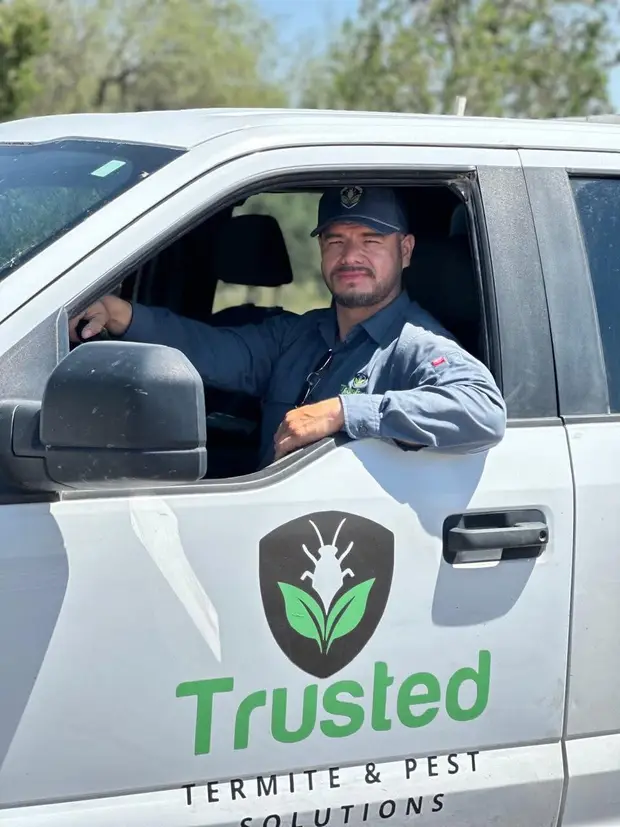
The number at the top of this page reaches Valentin Moriel, who owns the business, holds the licence and performs the work. There is no receptionist, no dispatcher, no sales team and no offshore answering service, and nothing you say gets relayed to somebody else before it reaches the person who will be standing on your property.
The practical effect shows up later rather than on the first call. What you described in March is still known in September, because there is no handover in which it could be lost. The person who priced the job finds out whether the price was right, which is a strong incentive to price it accurately. And a follow-up question goes to somebody who remembers your house rather than to a case number.
The trade-off is honest and worth stating: one person cannot answer every call instantly. Some calls become callbacks. In exchange, no call becomes a game of explaining the same thing to three different people.
If you are getting more than one quote
Get one. It is sensible and nobody here will take it personally. What is worth doing is comparing them properly, because the usual mistake is comparing the two numbers rather than the two scopes sitting behind them.
Ask each company to name the pests covered, say explicitly whether outbuildings are included, state whether the treatment is exterior only or interior as well, give the recurring price rather than only the introductory one, and describe the guarantee in terms of duration, covered scope and remedy. Then check both licences against the Texas Department of Agriculture's records, including whether the categories on the licence actually cover the work being quoted.
That takes about fifteen minutes total and it turns two numbers into two comparable offers. If the other one is better for your situation after that, take it — a fair comparison lost is a better outcome than a job won because the customer could not see what they were buying.
Before we get there
A few things make the visit go substantially better and none of them take long.
Clear access to the perimeter. The exterior walk is most of the inspection. Move what can be moved away from the foundation — stored material, bins, furniture, the woodpile if it is against the wall. What cannot be moved will be worked around, but it is also usually the exact spot worth looking at.
Unlock what needs unlocking. Gates, shops, barns, well houses. On rural properties this is the most common reason a visit does not finish, and it is entirely avoidable.
Say something about the dogs. Not a problem, just needs planning. Same for livestock, and for anywhere a vehicle cannot get to.
Mention anyone sensitive in the household. Infants, pregnancy, respiratory conditions, chemical sensitivities, aquariums, birds, reptiles, beehives. Every one of these affects what is used and where, and every one of them is easier to accommodate before the truck is loaded than after.
Have the notice in hand if there is one. City correspondence about weeds or property condition carries dates and specific requirements, and reading it out changes how the work gets sequenced.